Meaning
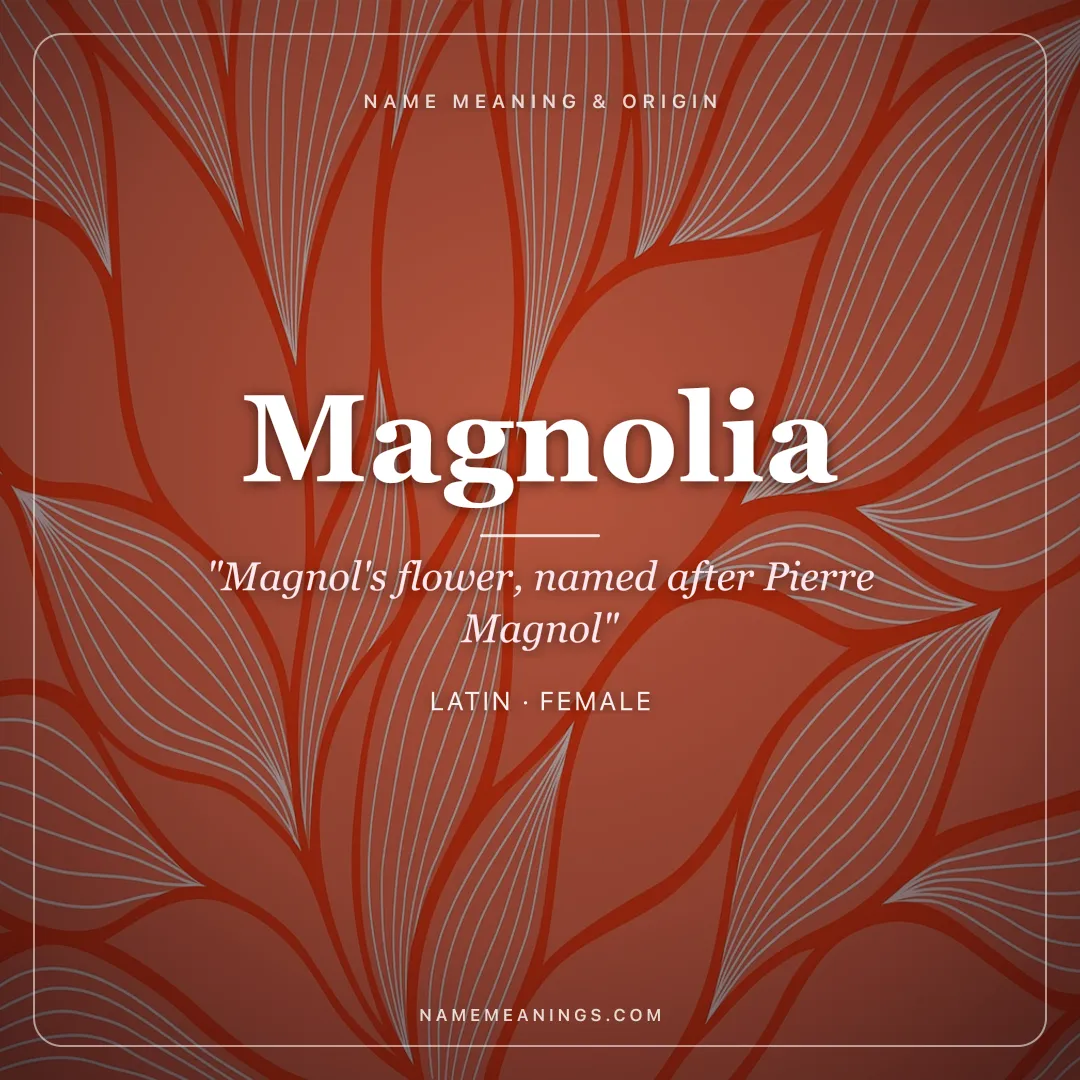
Magnol's flower, named after Pierre Magnol
Origin
Latin, French
Gender
Girl / Female
Pronunciation
mag-NOH-lee-uh
Name story
What Magnolia communicates
Magnolia is a girl name of Latin, French origin meaning "Magnol's flower, named after Pierre Magnol". That gives it a clear, rooted emotional tone that is easy to connect with and quick to remember.
It is pronounced mag-NOH-lee-uh and sits at a popularity score of 28/100 in our index, which suggests how widely it is chosen today. Names in this range tend to appeal to parents who want something recognizable yet still distinctive.
If Magnolia feels close but not quite right, the related names and theme links below lead to options that share its Latin, French heritage or its core idea of "Magnol's flower, named after Pierre Magnol". Comparing a few side by side is the easiest way to settle on the name that fits your family best.
Name insights
More about Magnolia
Syllables
4
Letters
8
Numerology number
9
In traditional numerology, Magnolia reduces to the number 9, associated with compassion, idealism, and a humanitarian heart.
Drawing on its meaning "Magnol's flower, named after Pierre Magnol", Magnolia is often associated with these traits:
Names that pair well with Magnolia
Sibling name ideas that share Magnolia's Latin, French origin.
Names with Similar Meanings
Names that share similar themes and meanings with Magnolia
Names with Similar Themes
Names meaning "Flower"
Names meaning flower represent bloom, beauty, growth, and the natural world. Flo...
Names meaning "Nature"
Names inspired by nature represent the earth, plants, animals, and the natural w...
Names meaning "Beauty"
Names meaning beauty represent grace, elegance, attractiveness, and charm. Beaut...
Frequently Asked Questions
What does the name Magnolia mean?
The name Magnolia means "Magnol's flower, named after Pierre Magnol". It is a name of Latin, French origin that has been carried across many cultures and generations. The meaning reflects qualities valued in Latin, French naming tradition, which is part of why parents who want a name with a clear, positive sense often choose Magnolia.
What is the origin of the name Magnolia?
Magnolia originates from Latin, French. Names of Latin, French origin tend to carry deep historical and cultural significance, shaped by language, religion, and tradition over centuries. Magnolia fits that pattern: its roots give it the meaning "Magnol's flower, named after Pierre Magnol" and connect it to a long lineage of related names that share the same heritage.
Is Magnolia a popular name?
Magnolia appears on baby-name popularity charts across many English-speaking countries. Its usage has shifted across generations, rising and falling with cultural moments, famous bearers, and naming trends. You can see where Magnolia sits relative to other names on its popularity score above, and compare it with similar names in the same style.
What names are similar to Magnolia?
Names similar to Magnolia include those with shared origins, related meanings, or a similar sound and rhythm. The related names and similar-meaning sections above list strong alternatives, so if you love Magnolia but want options, you can explore names that carry the same Latin, French heritage or the same idea of "Magnol's flower, named after Pierre Magnol".
How do you pronounce Magnolia?
Magnolia is pronounced "mag-NOH-lee-uh". Pronunciation can vary slightly by region and language, but this guide reflects the most common way the name Magnolia is said.
Is Magnolia a boy or a girl name?
Magnolia is most commonly used as a girl name. Like many names it can cross gender lines depending on culture, era, and family preference, but its Latin, French roots and traditional usage are reflected on this page. If you want a clearly gender-neutral option, browse our unisex names for alternatives.
What does the name Magnolia symbolize?
The name Magnolia symbolizes "Magnol's flower, named after Pierre Magnol". That theme gives Magnolia a distinct emotional tone that many parents connect with, and it links the name to a wider family of names built on the same idea. Exploring names that share the meaning "Magnol's flower, named after Pierre Magnol" is a good way to find alternatives with a similar feeling.
Is Magnolia a good baby name?
Magnolia is a meaningful choice: it carries the meaning "Magnol's flower, named after Pierre Magnol", has clear Latin, French heritage, and a recognizable pronunciation. Whether it is the right baby name depends on your taste, family traditions, and how it pairs with your surname.